Commercial Solar
Commercial Equipment Power Consumption in the Philippines (2026)
August 13, 2026 · SolarSwitch · 13 min read

Wattage and monthly running cost for more than fifty types of commercial equipment at Meralco General Power rates, with load profiles for seven business types — and the demand charge most owners don't know they're paying.
Quick Answer
Businesses are billed on two axes, not one. Above 5 kW of demand, Meralco moves you to General Service B or General Power, where the per-kWh distribution charge collapses to ₱0.1339 — about 6% of what a household above 400 kWh pays — and a demand charge on peak kilowatts takes its place. Energy costs ₱10.1355 per kWh. Demand costs ₱660.17 per kW per month, billed on your single highest sustained draw. That means capacity costs money before it runs. A 10 TR packaged air conditioner adds ₱7,262 a month in demand charges whether it runs one hour or seven hundred. Demand charges are 11–23% of a typical commercial bill across the seven business types modelled below — and for low load factor operations like salons and laundromats they hit the top of that range. The cheapest saving available to most businesses is sequencing, not equipment. Staggering start-up so the fryer, oven, dishwasher and aircon don't all fire at once reduces the billed peak at zero capital cost.
Why commercial billing works differently
A household pays almost entirely per kilowatt-hour. Use more, pay more; use nothing, pay almost nothing beyond fixed charges.
Commercial billing splits that in two.
| Households | Commercial (General Power) | |
|---|---|---|
| Generation | ₱9.2504 /kWh | ₱9.2504 /kWh |
| System loss | ₱0.8751 /kWh | ₱0.8751 /kWh |
| Distribution — energy | up to ₱2.0941 /kWh | ₱0.1339 /kWh |
| Distribution — demand | none | ₱232.20 /kW/month |
| Transmission | ₱1.2786 /kWh | ₱427.97 /kW/month |
July 2026 rates, VAT-exclusive.
Meralco did not make electricity cheaper for businesses. It moved most of the cost from the energy dimension to the capacity dimension — from how much you use to how hard you pull at your worst moment.
Everything below follows from that.
How big is your business, in electrical terms?
Two classifications matter, and they are not the same thing.
The official MSME classification
The Department of Trade and Industry classifies enterprises by asset size and headcount under the Magna Carta for MSMEs:
| Class | Total assets | Employees |
|---|---|---|
| Micro | Up to ₱3,000,000 | 1–9 |
| Small | ₱3,000,001 – ₱15,000,000 | 10–99 |
| Medium | ₱15,000,001 – ₱100,000,000 | 100–199 |
| Large | Above ₱100,000,000 | 200 or more |
This determines eligibility for government support and financing. It does not determine how your electricity is billed.
The classification that decides your bill
Meralco classifies by connected load and peak demand, and this is what governs your tariff:
| Meralco class | Threshold | Demand charges? | Typical MSME class |
|---|---|---|---|
| General Service A | Connected load under 5 kW | No — bracketed per-kWh, like a household | Micro |
| General Service B | 5 kW ≤ demand < 40 kW | Yes | Micro to Small |
| General Power — Medium | 40 kW ≤ demand < 200 kW | Yes | Small to Medium |
| General Power — Large | 200 kW ≤ demand < 750 kW | Yes | Medium to Large |
| General Power — Very Large | 750 kW ≤ demand < 10,000 kW | Yes | Large |
| General Power — Extra Large | 10,000 kW and above | Yes | Large industrial |
A micro enterprise by DTI's definition can easily sit in General Service B. A three-person laundromat with six washers and six dryers has fewer than ten employees and modest assets — and 53 kW of peak demand, which puts it in a heavier tariff class than a 40-seat office.
For solar purposes, the demand class is the one to know. It tells you whether demand charges apply, and therefore whether the timing of your load matters as much as its size.
Where the businesses modelled below sit
| Business | Peak demand | Meralco class | Typical DTI class |
|---|---|---|---|
| Coffee shop, 80 sqm | 12.2 kW | General Service B | Micro |
| Dental clinic, 120 sqm | 14.6 kW | General Service B | Micro |
| Convenience store, 120 sqm | 15.2 kW | General Service B | Micro to Small |
| Salon / spa, 100 sqm | 22.8 kW | General Service B | Micro to Small |
| Office / BPO, 40 seats | 26.1 kW | General Service B | Small |
| Restaurant, 200 sqm | 41.0 kW | General Power Medium | Small |
| Laundromat, 100 sqm | 53.2 kW | General Power Medium | Micro to Small |
Note the last row. By headcount and assets a self-service laundromat is a micro or small enterprise. By electrical demand it is in the same tariff class as a 200-seat restaurant. That mismatch is common in equipment-heavy, staff-light businesses, and it is why sizing solar from turnover or floor area rather than from the bill produces poor results.
Equipment tables
Energy cost at ₱10.1355/kWh, 30-day month. Demand charges handled separately.
About these figures. Tariff rates are taken from Meralco's published Summary Schedule of Rates and are verifiable against that source. Equipment wattages are representative figures for typical units, not measured data — actual draw varies by make, model, age and condition, sometimes considerably. Use them to understand the shape of your consumption and the relative weight of different loads. For decisions, use your own nameplate ratings, manufacturer datasheets, or a clamp meter reading.
Commercial refrigeration
| Equipment | Power | Hrs/day | kWh/month | Energy cost/month |
|---|---|---|---|---|
| Multideck open display chiller, 2.5 m | 1,200 W | 24 | 864 | ₱8,757 |
| Glass-door merchandiser chiller | 700 W | 24 | 504 | ₱5,108 |
| Island / coffin freezer | 900 W | 24 | 648 | ₱6,568 |
| Reach-in upright freezer | 800 W | 24 | 576 | ₱5,838 |
| Walk-in chiller condensing unit, 3 HP | 2,600 W | 16 | 1,248 | ₱12,649 |
| Walk-in freezer condensing unit, 5 HP | 4,200 W | 18 | 2,268 | ₱22,987 |
| Commercial ice maker, 100 kg/day | 1,500 W | 12 | 540 | ₱5,473 |
| Blast chiller | 3,000 W | 4 | 360 | ₱3,649 |
Commercial kitchen
| Equipment | Power | Hrs/day | kWh/month | Energy cost/month |
|---|---|---|---|---|
| Electric deep fryer | 5,000 W | 6 | 900 | ₱9,122 |
| Electric griddle / grill | 4,500 W | 6 | 810 | ₱8,210 |
| Convection oven | 6,000 W | 5 | 900 | ₱9,122 |
| Commercial rice cooker, 20 L | 2,000 W | 3 | 180 | ₱1,824 |
| Espresso machine, 2 group | 3,000 W | 8 | 720 | ₱7,298 |
| Bain marie / food warmer | 1,500 W | 10 | 450 | ₱4,561 |
| Kitchen exhaust hood, 1 HP | 750 W | 12 | 270 | ₱2,737 |
| Commercial dishwasher, hood type | 6,500 W | 4 | 780 | ₱7,906 |
| Dough mixer, 20 L | 1,100 W | 3 | 99 | ₱1,003 |
Commercial air conditioning
| Equipment | Power | Hrs/day | kWh/month | Energy cost/month |
|---|---|---|---|---|
| Split-type cassette, 3 HP inverter | 2,200 W | 10 | 660 | ₱6,689 |
| Split-type cassette, 5 HP inverter | 3,600 W | 10 | 1,080 | ₱10,946 |
| Packaged / ducted unit, 10 TR | 11,000 W | 10 | 3,300 | ₱33,447 |
| Packaged / ducted unit, 20 TR | 21,000 W | 10 | 6,300 | ₱63,854 |
| Air-cooled chiller, 50 TR | 52,000 W | 10 | 15,600 | ₱158,114 |
Retail, office and services
| Equipment | Power | Hrs/day | kWh/month | Energy cost/month |
|---|---|---|---|---|
| POS terminal with printer | 120 W | 13 | 47 | ₱474 |
| Server rack, small (2 kVA) | 1,600 W | 24 | 1,152 | ₱11,676 |
| Network switch and router cabinet | 300 W | 24 | 216 | ₱2,189 |
| Multifunction copier / printer | 800 W | 4 | 96 | ₱973 |
| Commercial water dispenser | 800 W | 24 | 576 | ₱5,838 |
| CCTV system, 16 cameras with NVR | 180 W | 24 | 130 | ₱1,314 |
| Retail LED lighting, per 100 sqm | 600 W | 13 | 234 | ₱2,372 |
| Digital signage display, 55 inch | 180 W | 13 | 70 | ₱712 |
| Autoclave / steriliser | 2,000 W | 3 | 180 | ₱1,824 |
| Professional hair dryer | 1,800 W | 4 | 216 | ₱2,189 |
Laundry, workshop and light industrial
| Equipment | Power | Hrs/day | kWh/month | Energy cost/month |
|---|---|---|---|---|
| Commercial washer, 15 kg | 3,000 W | 8 | 720 | ₱7,298 |
| Commercial dryer, 15 kg | 6,000 W | 8 | 1,440 | ₱14,595 |
| Flatwork ironer | 5,500 W | 4 | 660 | ₱6,689 |
| Air compressor, 5 HP | 3,700 W | 4 | 444 | ₱4,500 |
| Welding machine, 250 A | 5,000 W | 3 | 450 | ₱4,561 |
| Electric motor, 3 HP continuous | 2,200 W | 8 | 528 | ₱5,352 |
| Electric motor, 10 HP continuous | 7,500 W | 8 | 1,800 | ₱18,244 |
| Submersible pump, 3 HP | 2,200 W | 6 | 396 | ₱4,014 |
| Industrial exhaust fan, 1.5 HP | 1,100 W | 12 | 396 | ₱4,014 |
Agricultural
| Equipment | Power | Hrs/day | kWh/month | Energy cost/month |
|---|---|---|---|---|
| Tunnel ventilation fan, 50 inch | 1,100 W | 18 | 594 | ₱6,020 |
| Sidewall ventilation fan | 400 W | 18 | 216 | ₱2,189 |
| Evaporative cooling pad pump | 750 W | 12 | 270 | ₱2,737 |
| Feeder line motor | 750 W | 4 | 90 | ₱912 |
| Drinking line pump | 550 W | 8 | 132 | ₱1,338 |
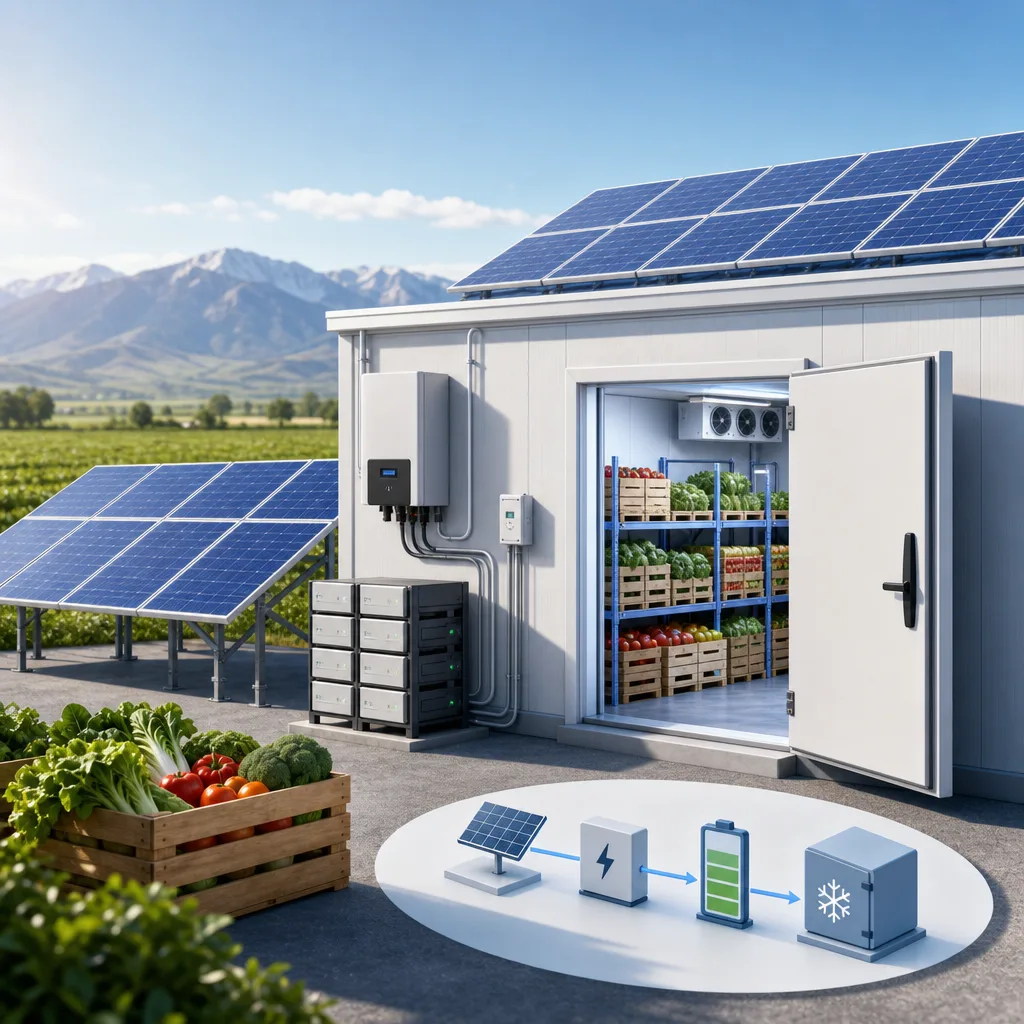
| Milk / produce cold room, 3 HP | 2,600 W | 20 | 1,560 | ₱15,811 |
| Irrigation pump, 5 HP | 3,700 W | 5 | 555 | ₱5,625 |
The demand charge
A demand charge is billed on peak kilowatts, not kilowatt-hours. If equipment is running when your monthly peak occurs, you pay for its full capacity — regardless of how many hours it ran that month.
Demand charge — what capacity costs before it runs
| Equipment at peak | Load | Demand charge/month |
|---|---|---|
| Kitchen exhaust hood, 1 HP | 0.75 kW | ₱495 |
| Espresso machine, 2 group | 3.0 kW | ₱1,981 |
| Commercial washer, 15 kg | 3.0 kW | ₱1,981 |
| Air compressor, 5 HP | 3.7 kW | ₱2,443 |
| Walk-in freezer unit, 5 HP | 4.2 kW | ₱2,773 |
| Electric deep fryer | 5.0 kW | ₱3,301 |
| Convection oven | 6.0 kW | ₱3,961 |
| Commercial dryer, 15 kg | 6.0 kW | ₱3,961 |
| Electric motor, 10 HP | 7.5 kW | ₱4,951 |
| Packaged aircon, 10 TR | 11.0 kW | ₱7,262 |
| Packaged aircon, 20 TR | 21.0 kW | ₱13,864 |
Demand rate: PHP 660.17/kW/month (transmission 427.97 + distribution 232.2)
Three consequences.
Rarely-used equipment can be expensive. A welding machine used twice a month costs almost nothing in energy. If it happens to be running at the moment of your monthly peak, it adds its full capacity to the demand charge for that whole month.
Simultaneity is the enemy. Two 5 kW loads running alternately cost half as much in demand charges as the same two running together — for identical energy consumption.
Solar only helps if it is generating at your peak. Panels reduce kilowatt-hours reliably. They reduce demand charges only when the sun is up at the moment your peak occurs. Our supermarket worked example shows a case where solar cuts the bill 31% and moves the demand charge by exactly nothing.
Load profiles by business type
Modelled from the equipment schedules above. These are illustrative models built from representative equipment ratings, not survey data. They show the shape of each business type's consumption and how much of the bill is capacity rather than energy — substitute your own figures for anything you intend to act on.
Coffee shop / café — 80 sqm
| Metric | Value |
|---|---|
| Continuous load | 1,460 W |
| Peak demand | 12.2 kW |
| Monthly consumption | 4,240 kWh |
| Load factor | 0.48 |
| Energy charge | ₱42,977 |
| Demand charge | ₱8,028 |
| Demand as share of bill | 15% |
| Estimated monthly bill | ₱52,663 |
Full-service restaurant — 200 sqm
| Metric | Value |
|---|---|
| Continuous load | 4,480 W |
| Peak demand | 41.0 kW |
| Monthly consumption | 11,809 kWh |
| Load factor | 0.40 |
| Energy charge | ₱119,686 |
| Demand charge | ₱27,087 |
| Demand as share of bill | 18% |
| Estimated monthly bill | ₱148,432 |
Convenience store — 120 sqm
| Metric | Value |
|---|---|
| Continuous load | 4,730 W |
| Peak demand | 15.2 kW |
| Monthly consumption | 7,546 kWh |
| Load factor | 0.69 |
| Energy charge | ₱76,478 |
| Demand charge | ₱10,054 |
| Demand as share of bill | 11% |
| Estimated monthly bill | ₱88,192 |
Beauty salon / spa — 100 sqm
| Metric | Value |
|---|---|
| Continuous load | 1,410 W |
| Peak demand | 22.8 kW |
| Monthly consumption | 4,927 kWh |
| Load factor | 0.30 |
| Energy charge | ₱49,940 |
| Demand charge | ₱15,058 |
| Demand as share of bill | 23% |
| Estimated monthly bill | ₱66,657 |
Dental / medical clinic — 120 sqm
| Metric | Value |
|---|---|
| Continuous load | 960 W |
| Peak demand | 14.6 kW |
| Monthly consumption | 3,505 kWh |
| Load factor | 0.33 |
| Energy charge | ₱35,527 |
| Demand charge | ₱9,645 |
| Demand as share of bill | 21% |
| Estimated monthly bill | ₱46,831 |
Self-service laundromat — 100 sqm
| Metric | Value |
|---|---|
| Continuous load | 360 W |
| Peak demand | 53.2 kW |
| Monthly consumption | 13,405 kWh |
| Load factor | 0.35 |
| Energy charge | ₱135,868 |
| Demand charge | ₱35,095 |
| Demand as share of bill | 20% |
| Estimated monthly bill | ₱172,622 |
Small office / BPO — 300 sqm, 40 seats
| Metric | Value |
|---|---|
| Continuous load | 2,320 W |
| Peak demand | 26.1 kW |
| Monthly consumption | 8,672 kWh |
| Load factor | 0.46 |
| Energy charge | ₱87,899 |
| Demand charge | ₱17,244 |
| Demand as share of bill | 16% |
| Estimated monthly bill | ₱106,802 |
Load factor: the number that tells you most
Load factor is monthly kWh divided by (peak kW × hours in the month). It measures how evenly you use the capacity you are billed for.
| Business type | Peak demand | Load factor | Demand share of bill |
|---|---|---|---|
| Convenience store | 15.2 kW | 0.69 | 11% |
| Coffee shop | 12.2 kW | 0.48 | 15% |
| Office / BPO | 26.1 kW | 0.46 | 16% |
| Restaurant | 41.0 kW | 0.40 | 18% |
| Laundromat | 53.2 kW | 0.35 | 20% |
| Dental clinic | 14.6 kW | 0.33 | 21% |
| Salon / spa | 22.8 kW | 0.30 | 23% |
High load factor — a convenience store at 0.69 — means steady, continuous draw dominated by refrigeration. Demand charges are a small share of the bill, and solar reduces energy charges predictably.
Low load factor — a salon at 0.30 — means short bursts of heavy load against a small base. Demand charges bite hardest, and reducing them is often worth more than reducing consumption.
The practical test: if your load factor is below about 0.4, look at demand management before you look at solar. If it is above 0.6, solar is likely the better first move.
How to reduce a demand charge
None of these require capital.
Sequence your start-up. A kitchen firing the fryer, griddle, oven and dishwasher together at 10:00 pays demand on all four simultaneously. Staggering them across twenty minutes cuts the peak with no loss of output.
Move deferrable loads off the peak. Towel laundry in a salon, stock room work in retail, dishwashing cycles, water pumping — anything that does not have to happen at a specific moment.
Pre-cool. Running refrigeration or air conditioning harder before your busy period, then easing off during it, uses the building's thermal mass as free storage.
Correct your power factor. Meralco applies a penalty of 1.4% of the distribution charge for poor power factor and a discount of 0.7% for good. Capacitor banks cost a fraction of solar and should usually be done first.
Check for a phantom peak. A single fifteen-minute event — a compressor and an oven and an aircon bank coinciding once in a month — sets your charge for the whole month. Interval data from Meralco will show you when it happened.
What this means for solar
Three questions decide whether solar suits a commercial site, and none of them is "how big is my bill."
1. When does your peak occur? If it is mid-afternoon, solar will reduce demand charges meaningfully. If it is at 19:00, it will not touch them.
2. What is your load factor? Above 0.6 and most of your bill is energy, which solar attacks directly. Below 0.4 and a large share is capacity, which it mostly cannot.
3. How much of your consumption is in daylight? A restaurant peaking at dinner service and a convenience store running refrigeration around the clock have very different answers, even at similar monthly bills.
Our commercial solar guide works through the full method, and the hotel and supermarket worked examples show it applied end to end.
Frequently asked questions
How is a business electricity bill calculated in the Philippines?
Above 5 kW of demand, Meralco bills commercial customers on two axes: energy consumed, at approximately ₱10.1355 per kWh under General Power Secondary rates, and peak demand, at ₱660.17 per kW per month combining transmission and distribution. Fixed supply and metering charges apply on top.
What is a demand charge and why am I paying it?
A demand charge is billed on your highest sustained power draw during the billing month, measured in kilowatts, independently of how much energy you consume. It reflects the network capacity your connection requires. A business peaking at 40 kW pays roughly ₱26,407 a month in demand charges whether it operates one shift or three.
How much electricity does a restaurant use in the Philippines?
Our model for a 200 sqm full-service restaurant gives approximately 11,809 kWh a month against a peak demand of 41 kW, producing an estimated bill around ₱148,400. Cooking equipment and air conditioning dominate, with walk-in refrigeration running continuously underneath.
Which uses more electricity, commercial refrigeration or air conditioning?
It depends on operating hours. Refrigeration runs twenty-four hours and accumulates consumption steadily — a walk-in freezer condensing unit can reach 2,268 kWh a month. Air conditioning draws far more power but for fewer hours, so it typically dominates peak demand while refrigeration dominates total energy.
How can I reduce my business electricity bill without buying anything?
Sequence equipment start-up so heavy loads do not coincide, move deferrable work off your peak period, pre-cool refrigeration and air conditioning before busy periods, and correct your power factor if you are being penalised. These reduce demand charges, which solar often cannot touch.
Does solar reduce demand charges?
Only when generating at the moment your peak occurs. A business peaking mid-afternoon will see meaningful reduction; one peaking after sunset will see almost none. This is why load profile analysis, not bill size, determines whether commercial solar performs as expected.
Assumptions
| Item | Value |
|---|---|
| Energy rate | ₱10.1355/kWh — Meralco General Power Secondary, July 2026, VAT-exclusive |
| Demand rate | ₱660.17/kW/month — transmission ₱427.97 + distribution ₱232.20 |
| Fixed charges | ₱1,659.26/month — supply ₱827.54 + metering ₱831.72 |
| Month length | 30 days |
| Equipment figures | Average operating draw, not nameplate maximum |
Rates change monthly and differ between distribution utilities. Divide your total bill by total kWh for your true all-in rate, and take the demand (kW) figure directly from the bill.
For household appliances, see our residential wattage chart.